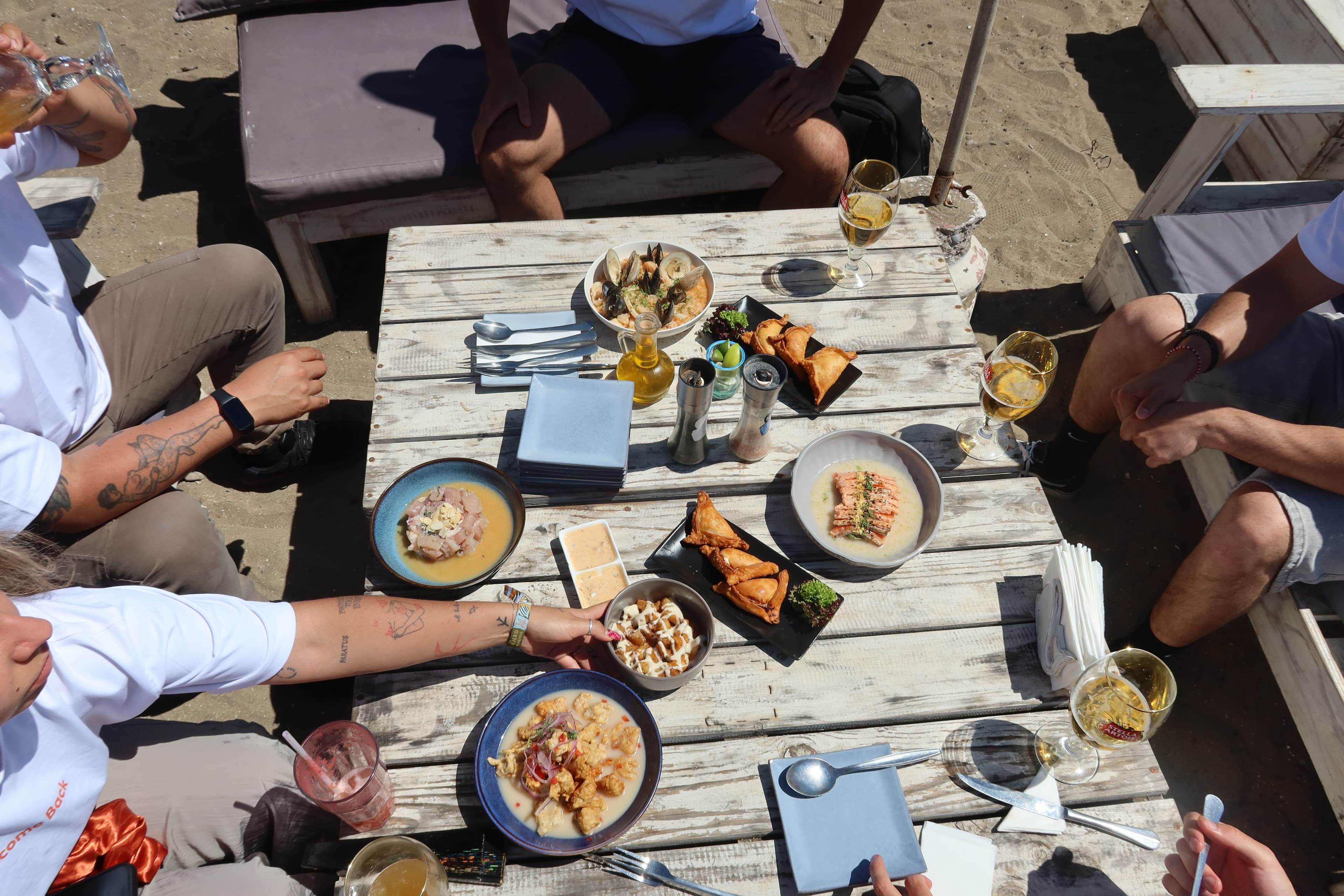

Picture Friday night. Tables full, food going out hot, guests leaving with smiles. By Monday morning, you have no idea who any of those people were.
That's the hidden cost of a restaurant without a guest onboarding system. You created a good experience. You just can't do anything with it.
Industry data from Bloom Intelligence and Restroworks puts a number on this: 70% of first-time restaurant guests never return. Not because the food was bad. Because there was no system pulling them back toward a second visit. And the guests who do come back for a second visit? They average 6.93 total visits over their lifetime with the restaurant, making that second visit the single most important moment in the entire customer relationship.
This is the guide to engineering that second visit. Not through blanket discounts, not through aggressive retargeting ads. Through a loyalty onboarding sequence that runs automatically, from the moment a guest scans your menu to the day their habit is formed.
Welcome Back increases visit frequency by 22% in restaurants with an active loyalty program. 96% of issued digital loyalty cards remain active after one year. Average ticket increases by 18%. Setup takes under two hours. Over 200 active restaurants across Chile, Mexico, Colombia, Argentina, Peru, and Spain.
The "pre-loyalty gap": where restaurants lose most of their new guests
There's a concept restaurant operators are increasingly calling the "pre-loyalty gap": the window between a guest's first visit and the moment they start behaving like a regular. It's the phase that most loyalty programs completely ignore.
Traditional loyalty programs are built for retention, rewarding the behavior of guests who were already going to come back. They're designed to reinforce an existing habit, not create a new one.
The result: your loyalty program serves the 30% who would have returned anyway. The other 70% walk out the door and never get a reason to return.
The better question isn't "how do I reward my frequent customers?" It's "how do I turn someone who came once into someone who comes twice?"
Those are fundamentally different design challenges. The first is retention. The second is onboarding.
Why the second visit matters more than the first
Bloom Intelligence's research on restaurant return rates reveals something striking: it takes guests an average of three to five visits to develop a genuine habit around a restaurant. The first visit is evaluation. The second is curiosity. By the third or fourth, pattern recognition kicks in, and the restaurant starts to feel like "their place."
The implication is uncomfortable. If a guest only ever visits once, it doesn't matter how good the food was. There's no habit forming. There's no relationship. The restaurant just served a one-time customer.
Reaching the second visit is how you get the multiplier effect. A guest who comes back twice is far more likely to come a third time. A guest who comes three times has started building a real habit.
That's why the window between day one and day 14 is so critical. A guest who visited a restaurant last Thursday and hasn't received a single piece of communication since is already drifting. Their attention and their next lunch decision are up for grabs.
If you want to understand the broader mechanics of building restaurant customer loyalty without an app, our guide covers the full framework.
What restaurant onboarding actually looks like
In software companies, onboarding is the process by which a new user experiences the core value of a product for the first time, then gets hooked. Without it, users sign up and churn before they understand what they're using.
The restaurant parallel is exact. A first-time guest is a trial user. They had a good experience, but they haven't committed yet. The onboarding process is what converts that trial into a pattern.
Here's the four-step sequence that works:
Step 1: Enrollment at the moment of peak satisfaction
The highest-leverage moment to enroll a new guest is immediately after a good meal, when satisfaction is highest and they're already holding their phone to pay. The QR code on the table or at the counter links to the loyalty enrollment in the digital menu. No app to download. The card appears in Apple Wallet or Google Pay in under 30 seconds.
The staff script is simple: "Scan the QR to earn points from today." That's it.
Step 2: The welcome push (within 24 hours)
The first message a new loyalty member receives sets the tone for the entire relationship. It should arrive within 24 hours of registration, while the positive experience is still fresh.
Push notifications sent through Apple Wallet have open rates around 60%, compared to roughly 20% for email. The message lands on the lock screen without requiring the guest to open any app.
The content: confirm their registration, show them how many points they have, and give them a specific next step. "Welcome to [Restaurant Name]. You've got 30 points. You're 70 away from your first reward." Short. Specific. Personal.
Step 3: The progress reminder (day 3-5)
If the guest hasn't returned in three to five days, the system sends a second message, framed around their progress, not a promotional push. "You're halfway to your first reward. Here's what's on the menu this week."
This leverages what behavioral economists call the "endowed progress effect," documented by Kivetz, Urminsky, and Zheng in the Journal of Marketing Research. People who feel they've already started progress toward a goal are significantly more likely to complete it. A guest who has 30 loyalty points already feels ownership. They want to see where it goes.
This is fundamentally different from a 10% discount. A discount tells the guest your food isn't worth full price. A progress bar tells them they're invested in something.
Step 4: The early win-back (day 10-14)
If a new guest hasn't returned within 10 to 14 days, they're at a fork in the road. Most restaurants do nothing at this point. The guests who leave this window without contact have dramatically lower re-conversion rates after day 21.
The right message at day 10 isn't aggressive. It's a casual check-in with something new: "It's been a week and a half. We just added three new dishes. Your table is ready."
The specificity matters. A generic "We miss you!" message gets ignored. A message that references time, offers something new, and treats the guest like a specific person gets opened.
For a deeper look at re-engaging lapsed restaurant customers, including the full three-message win-back sequence, that guide covers the mechanics in detail.
The habit formation window: what the science says
Habit formation research from behavioral psychology (particularly the work associated with Charles Duhigg's synthesis of MIT habit loop research) shows that habits require repetition within a consistent context. For restaurants, that context is usually a specific day, time, or occasion: Tuesday lunch, Friday dinner, post-workout coffee.
The implication: if a guest visits your restaurant once on a Thursday, your best chance of having them build a Thursday habit is to get them back on a Thursday within the next two to three weeks. If they skip two or three Thursdays without a prompt, that context slot gets filled by a competitor or a different routine.
This is why timing matters in the onboarding sequence. A welcome message sent a week after registration is already late. A progress reminder sent on the same day of the week as the original visit has higher conversion because it matches the behavioral context that triggered the first visit.
Welcome Back's marketing automation platform handles this timing automatically. It knows when each guest visited and schedules follow-up messages to land at behaviorally relevant moments, not just on a generic 3-day or 7-day timer.
What competitors offer, and where they fall short
The restaurant loyalty space in LATAM has gotten crowded. Tools like LoyiCard, BonusQR, and Ruklo all offer digital loyalty cards. Some send basic push notifications. A few have rudimentary automation.
What none of them offer is the full integration stack: digital menu enrollment + loyalty program + behavioral automation + segmentation, in one system where all the data talks to each other.
The fragmentation problem is real. If a guest scans a QR menu on one platform, enrolls in a loyalty card on another, and the push notifications come from a third tool that doesn't know when the guest last visited, the onboarding sequence breaks down. The system sends messages based on registration dates, not behavior. It can't tell the difference between a guest who just came back yesterday and one who hasn't been seen in three weeks.
When everything is integrated, the restaurant always knows exactly where each guest is in their journey, and the automation adjusts accordingly.
Valentina runs a small restaurant group in Guadalajara with two locations. Before centralizing on a single platform, she was managing loyalty cards manually and sending WhatsApp broadcasts to a list she maintained in a spreadsheet. Each campaign required hours of work, and she could never be sure the message was reaching the right people at the right moment.
"Now the whole thing runs by itself," she said. "I can see exactly how many new customers enrolled this week, which ones came back, and which ones haven't come back yet. And the system is already doing something about the ones who haven't."
Measuring whether your onboarding is working
Three metrics tell you most of what you need to know:
Visit-one to visit-two conversion rate. Of every 100 new guests who enroll in your loyalty program, how many return within 30 days? The restaurant industry average without an active onboarding system sits around 30%. With a structured sequence, 50% or higher is achievable.
Days to second visit. How long does it take for a new guest to come back? If the average drops from 21 days to 11, your onboarding is compressing the habit formation cycle. That's significant.
Welcome message open rate. If fewer than 50% of new guests are opening the welcome push, something's off with the message or the timing. Optimize the copy and the send window before anything else.
The Welcome Back dashboard surfaces all three of these metrics by location, so you can see which of your restaurants has the strongest onboarding performance, and what's different about how that location runs the enrollment process.
The most common onboarding mistakes
Skipping staff alignment. The QR code on the table does nothing if no one mentions it. Enrollment happens when a staff member says something. Train the team to bring it up at the point of payment, naturally, not as a pitch.
Making the welcome message promotional. The first message should confirm registration, show progress, and create anticipation. Not sell. Guests who enrolled two minutes ago aren't ready to hear about your catering packages.
Treating all new guests the same. A guest who comes back in five days needs different messaging than one who hasn't returned in 15. Segmentation isn't optional. It's what separates a real onboarding system from an automated blast.
Stopping after one message. Most restaurant operators send a welcome message and call it done. The data says the second and third touchpoints have comparable open rates to the first, if the message is different. Don't stop; adapt.
Building the habit that earns you a regular
The fundamental reason restaurants lose 70% of their new guests has nothing to do with food quality. It has to do with what happens (or doesn't happen) in the two weeks after the first visit.
A guest who had a great experience and received a well-timed follow-up message has something to return to. A guest who had a great experience and heard nothing has no particular reason to choose your restaurant over the three other options they're considering on Tuesday.
The difference between a restaurant with a loyal customer base and one that's constantly chasing new guests comes down to this system. It doesn't have to be complicated. It has to be consistent, timely, and behaviorally smart.
Request a free Welcome Back demo to see how the full onboarding sequence works: from QR enrollment to automated follow-up to win-back. Setup in under two hours. No app for the customer. No credit card to get started.
Frequently asked questions
What percentage of first-time restaurant guests never return?
Industry data consistently shows that 70% of first-time restaurant customers don't come back. The critical insight is that this isn't primarily about bad experiences. It's about the absence of a system that bridges the gap between visit one and visit two.
How many visits does it take for a guest to become a regular?
According to Bloom Intelligence research, guests who return for a second visit average 6.93 total visits to a restaurant. That makes the second visit the pivotal moment. successfully bringing a guest back once dramatically increases the probability they'll become a true regular.
What is a restaurant customer onboarding system?
Restaurant customer onboarding is the automated process that follows a guest's first visit to drive a second visit. It typically includes: capturing the guest's contact via a loyalty enrollment at the point of sale, a welcome push notification sent within 24 hours, a progress-based follow-up message on day 3-5, and a win-back sequence if they haven't returned by day 10-14.
Do loyalty onboarding sequences require apps or complex tech?
No. The most effective restaurant onboarding systems use Apple Wallet and Google Pay, which are already on every customer's phone. The guest scans a QR code from the menu, joins the loyalty program in under 30 seconds, and receives push notifications directly from their Wallet without downloading anything new.
How quickly can a restaurant see results from a loyalty onboarding program?
Restaurants using Welcome Back typically see measurable changes in visit frequency within the first 60-90 days. The second-visit conversion rate (the share of new guests who return within 30 days) is the leading indicator to watch.
What's the difference between a welcome discount and a welcome points head start?
A welcome discount signals that your food isn't worth full price. A points head start creates the "endowed progress effect" (guests feel they've already started something and want to complete it. The psychological pull of an incomplete progress bar outperforms a one-time discount because it generates ongoing behavior, not a single transaction.