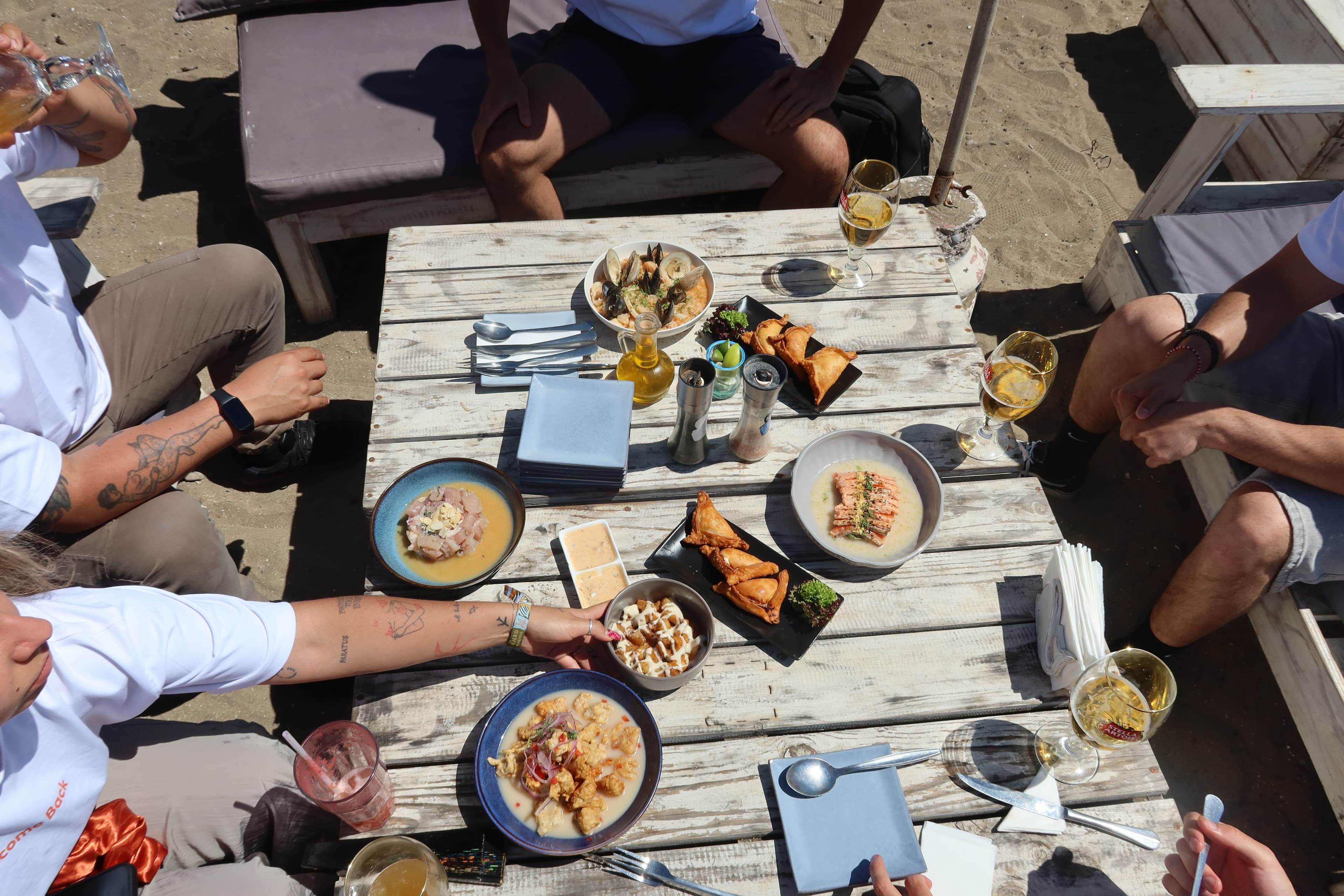

There's a taquería in Mexico City's Colonia Narvarte that most people in the neighborhood visit without really deciding to. Thursday evening comes around and they're just there, ordering the same thing. Nobody made a deliberate choice. It just happened.
That's a habit. And it's the most durable competitive advantage a restaurant can build.
The problem is that most loyalty programs are designed to create incentives, not habits. They offer a free item after ten visits and hope the discount creates loyalty. It doesn't. What they actually create is a transaction: customers who come back for the reward, not for the routine.
Restaurants using Welcome Back see a 22% increase in visit frequency among active program members. 96% of issued loyalty cards remain active after one year. Average ticket increases by 18%. These aren't discount-driven. They're the numbers that emerge when a program is designed to build behavioral repetition, not just redeem coupons.
This guide covers the behavioral mechanics behind habit formation and how to design a loyalty program that builds genuine, automatic behavior, not just repeat purchases.
Habit vs. loyalty: why the distinction matters
Charles Duhigg's research in The Power of Habit mapped what neuroscientists call the habit loop: cue, routine, reward. The basal ganglia (the part of the brain that handles automated behavior) encodes habits once a routine has been repeated enough times in response to the same cue and followed by the same reward signal.
Loyalty is conscious. Habit is automatic.
A loyal customer thinks: "I'm going to order from them again because it was great last time." A habitual customer doesn't think at all. They're already seated.
For restaurants, habit is worth more. Loyal customers can be poached by a competitor with a better offer. Habitual customers don't evaluate alternatives; your restaurant is the default.
The behavioral economics research firm BehavioralEconomics.com makes this distinction explicit: "Loyalty programs work best not when they create transactions, but when their rewards serve as reinforcers of habits, encoding in the customer's basal ganglia that this action was worth repeating."
The practical implication is this: if your loyalty program only fires at the redemption moment (when the customer gets their free item), you're reinforcing the reward but not the cue or the routine. You're building a discount reflex, not a visit habit.
The three-visit threshold: when habit formation begins
Not all visits are equal in building a habit.
Research on customer retention in the restaurant sector consistently points to the second and third visit as the habit formation window. A customer who visits once is a first-time guest. A customer who visits twice in 14 days is showing early signs of habit formation. A customer who visits three times within 30 days has almost certainly built a behavioral routine around your restaurant.
In Welcome Back data across 200+ restaurants in Latin America, customers who reach a third visit within their first 30 days of program enrollment have a card retention rate of 96% at 12 months. Below three visits in the first 30 days, that rate drops significantly.
This means your loyalty program's most important job isn't rewarding visit #10. It's engineering visits #2 and #3.
Sofia Reyes runs a café in Lima's Miraflores district. Before she restructured her Welcome Back automation, her welcome flow sent a single generic message at enrollment. Her 30-day second-visit rate was 34%. After she added a targeted prompt at day 7 ("You're 3 stamps from your first reward, come back this week for double stamps"), it climbed to 58%. The same customers. The same product. Different cue timing.
How the habit loop applies to restaurant loyalty programs
The cue: In a restaurant context, effective habit cues are time-based or location-based. "It's Thursday" or "I'm walking past the restaurant." Loyalty programs that rely on app notifications require the customer to actively open the app. The cue is buried. Wallet-based programs (Apple Wallet, Google Pay) deliver lock-screen notifications passively. The cue lands without friction.
This is one of the least-discussed advantages of Wallet loyalty cards: they can deliver a habit cue at the right moment without requiring any action from the customer. A Thursday afternoon push notification, "Your usual table is ready for tonight," arrives like a text from a friend, not like a marketing email that has to be opened.
The routine: The routine is the visit itself: walking in, ordering the usual, interacting with the team. The more consistent the experience, the stronger the routine. This is why your loyalty program benefits from encouraging customers to visit at the same time of day, the same day of the week, and order from the same part of the menu. Variability slows habit formation. Consistency accelerates it.
The reward: This is where most loyalty programs focus exclusively, and that is often where they go wrong. A reward doesn't need to be financial to activate the dopamine response that reinforces a habit. Recognition works. Status works. Anticipation works even better than receipt.
James Haruki, a behavioral marketing consultant who has worked with restaurant chains across Southeast Asia and Latin America, put it this way in a 2024 piece for the National Restaurant Association: "The reward that builds the strongest habits isn't the free item. It's the near-reward: the moment when a customer sees they have 9 of 10 stamps and feels the pull to complete the set. That anticipation is more powerful than the redemption itself."
Designing for habit formation, not just redemption
Most loyalty programs are designed around the redemption event. Here's how to redesign yours around the habit loop.
Make the cue reliable and frictionless
If your loyalty card lives in Apple Wallet, it's visible on the lock screen. Send a push notification at the same time every week. Tuesday at 12:30 PM if your crowd is lunch-driven, Friday at 6:00 PM if it's dinner. Consistency in the cue timing trains the brain to anticipate it.
Don't send a different type of message every week. The cue needs to be predictable: same tone, same basic trigger, same channel.
Compress the early reward schedule
The biggest mistake in loyalty program design is requiring too many visits for the first reward. If a customer needs 15 stamps for their first benefit, the reinforcement cycle is too long for habit formation. The reward comes after the habit should already exist. It doesn't create it.
For LATAM independent restaurants, 8-10 stamps for the first reward is the practical ceiling. Better: make the first reward come at stamp 5 or 6, then require 10-12 for the second. The early reward reinforces the behavior while the habit is still fragile.
Activate the near-reward moment
The endowed progress effect (Nunes & Drèze, Journal of Consumer Research, 2006) shows that people work harder toward a goal when they feel they've already started. A customer who receives 2 "complimentary" stamps at enrollment works harder to complete the card than a customer who starts from zero, even though both are objectively the same distance from the reward.
In Welcome Back, this is configured through the card design and welcome automation: new members receive a head start of 1-2 stamps, and get a notification 3 days after enrollment reminding them how close they are to their first reward.
Use status, not just rewards, as reinforcement
Tier-based programs that confer visible status (a named tier, a badge on the digital card, early access to new menu items) generate stronger habit signals than flat-rate point programs. The reason is that status is ongoing reinforcement: the customer sees their tier every time they open their Wallet card, not just at redemption.
This matters most for customers who visit frequently anyway. For your best regulars, a free coffee every 10 visits is already priced in. What they actually want is recognition. A "VIP" tier with table priority or a seasonal menu preview builds the kind of attachment that doesn't transfer to a competitor.
What breaks habit formation (and how to prevent it)
Habits break when the cue, routine, or reward chain is interrupted.
The menu change problem. A customer builds a habit around a specific dish. You change the menu and it's gone. Their routine is disrupted. The fix isn't to never change your menu. Notify loyal members in advance, give them a "last chance" visit, and introduce the new item as a members-first preview. The change becomes a loyalty event rather than a disruption.
The long gap problem. A customer misses 3 weeks because of travel or schedule changes. Without a re-engagement nudge, the habit may not resume. The fix is a behavioral automation: any member who hasn't visited in 21 days gets a personalized push notification. Skip "we miss you" and go with something specific, like: "Your [card name] has been waiting. Come back this week and earn double stamps."
The inconsistent experience problem. If the customer's experience varies significantly, with different service quality, different product, different staff behavior, the routine part of the habit loop is unstable. The loyalty program can't fix operational inconsistency. But it can help identify it: customers who drop out after a period of regular visits often had a specific bad experience. Track churn by time period to spot these patterns.
The habit-forming loyalty stack for LATAM independents
Here's a practical architecture for a habit-building loyalty program that works without an app and without constant discounting:
Week 0 (enrollment):
- Customer scans QR code at table or counter
- Digital card lands in Apple Wallet / Google Wallet immediately
- Card shows 2 complimentary stamps and the reward threshold
- Welcome notification fires within 2 hours: benefit reminder + first visit prompt
Day 7 (early reinforcement):
- If no second visit: push notification with specific prompt ("You're 6 stamps from [reward]. Double stamps this week.")
- If second visit happened: confirmatory notification celebrating progress ("Halfway there, 5 more visits to your reward.")
Day 21 (habit window check):
- If 3+ visits: customer is on track. Light check-in only.
- If 1-2 visits: reactivation push with near-reward framing.
- If 0 visits since enrollment: stronger win-back message.
Ongoing (habit maintenance):
- Weekly cue at consistent day/time (push notification)
- Pre-reward alert at stamp N-1 (the near-reward moment)
- Tier upgrade notification when threshold is crossed
- Inactivity trigger at 30 days with personalized re-entry offer
This structure maps directly onto the marketing automation capabilities in Welcome Back: each step is a behavioral trigger, not a broadcast.
Measuring whether habits are forming
Three metrics tell you whether your program is building habits or just transactions:
Second-visit rate within 14 days. If less than 30% of new members visit again within 14 days of enrollment, your onboarding sequence isn't creating urgency. Target: 40%+.
Third-visit rate within 30 days. This is the habit threshold. Target: 35%+ of new members hitting visit #3 within their first month.
Churn at 60 days. Members who haven't visited in 60 days are almost never coming back. If your 60-day churn is above 40%, the habit loop broke somewhere. Use behavioral segmentation to see at which visit count most churn happens. That's where your automation needs work.
The loyalty program dashboard in Welcome Back tracks all three natively. The segments module lets you filter by visit count and enrollment date, so you can see exactly where in the habit formation sequence you're losing customers.
FAQ: Building restaurant customer habits with loyalty
How long does it take to form a restaurant habit? Research by Phillippa Lally at University College London found habits take a median of 66 days to form. For restaurants, the practical target is 3 visits within the first 30 days. That window correlates strongly with 12-month retention.
Do habit-based loyalty programs work without discounts? Yes. Status rewards, tier recognition, and near-reward anticipation activate the same behavioral reinforcement as discounts, without training customers to expect price cuts.
What's the difference between loyalty and habit? Loyalty is a conscious preference. Habit is behavioral automation. Habitual customers don't evaluate alternatives. Your restaurant is the default choice.
How do Wallet cards build habits differently than app programs? Wallet cards deliver cues passively via lock-screen notifications. If the cue requires opening an app, the habit loop can break before it becomes automatic.
What visit frequency signals a habit has formed? Two or more visits per month for 3 consecutive months. In Welcome Back data, members who hit visit #3 within 30 days of enrollment have a 96% 12-month retention rate.
How does segmentation support habit formation? It lets you send the right message at the right stage: activation nudges for customers at 1-2 visits, reinforcement for 3-5 visits, recognition (not discounts) for 6+ visits.
Building customer habits is the long game. It takes a few months to show up clearly in your data, but once a habit is formed, it's remarkably durable. A loyal customer can be convinced by a better offer. A habitual customer just shows up.
The fastest way to build those habits is a loyalty program designed around the habit loop: consistent cues, reliable routine, timely reinforcement, not one designed around the redemption event.
See how Welcome Back builds habit-forming loyalty programs for independent restaurants across Latin America. Setup takes under 2 hours, and the behavioral automation runs on its own from day one.
Also worth reading: How to Turn First-Time Restaurant Guests Into Regulars and Increase Restaurant Visit Frequency Without Discounts.