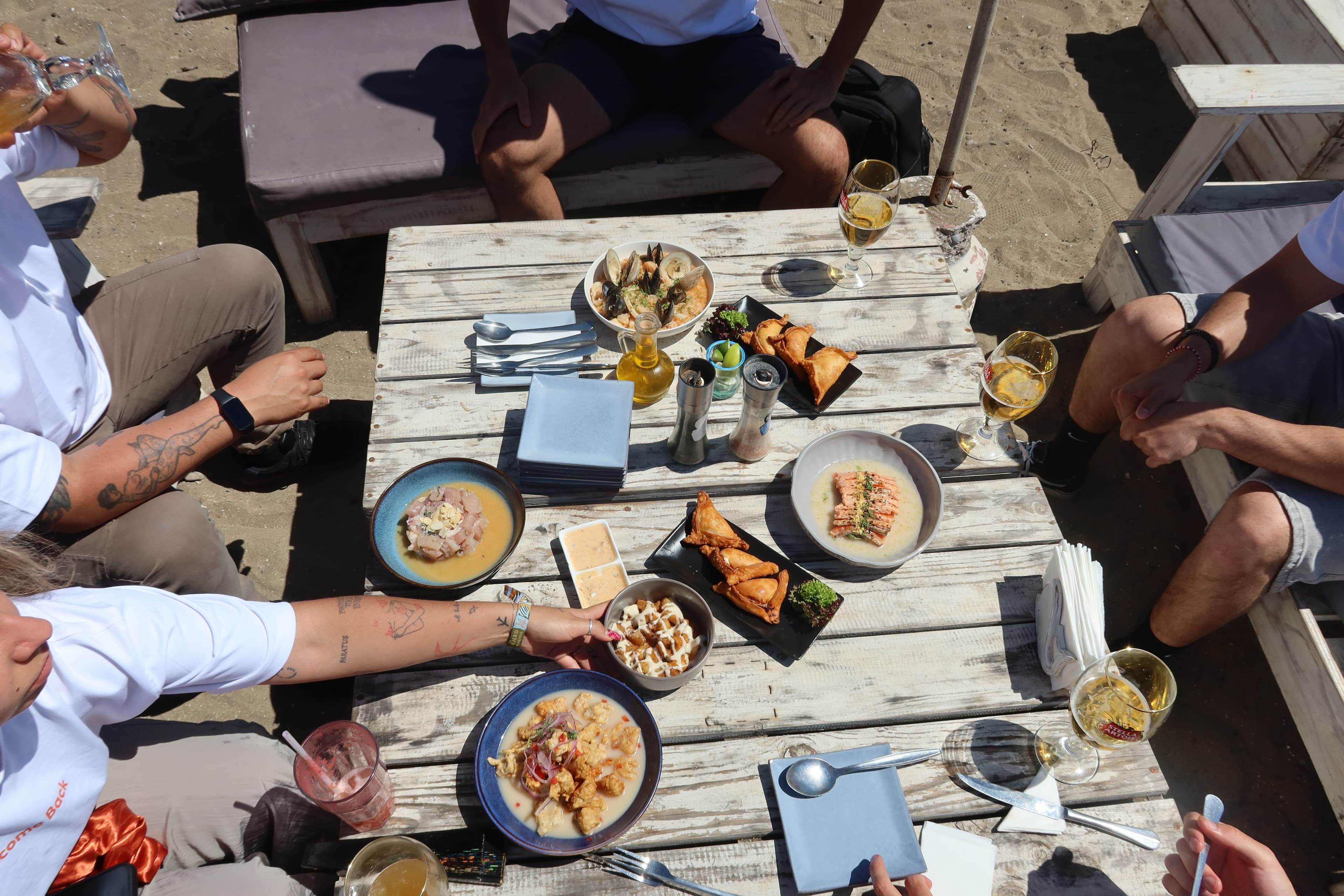

James opened his second restaurant location in Santiago last year. He did everything right: branded menus, trained staff, solid kitchen team. Within three months, he had a problem he didn't expect.
"We were filling the dining room. New customers every week. But the same faces weren't coming back as often as I expected. I had no idea who my regulars were or how to reach them."
He had a QR code menu. He did not have a QR code menu that worked for him.
That distinction is what this guide is about.
A QR code menu for restaurants is one of the most common pieces of technology in dining rooms across Latin America right now. It's also one of the most underused. Most restaurants treat it as a convenience tool. The ones that grow treat it as the first step in a customer relationship.
Here's everything you need to know to be in the second group.
Restaurants that pair a QR menu with an active loyalty program through Welcome Back see an 18% increase in average ticket within the first 90 days. Visit frequency climbs by 22%. 96% of loyalty cards issued remain active after one year. Over 200 restaurants across Chile, Mexico, Colombia, Argentina, and Peru run both tools from a single dashboard, with setup completed in under two hours.
Want to see how it works for your restaurant? Explore Welcome Back's digital menu
What a QR code menu actually does (and doesn't do)
Let's be clear about what we're talking about. A QR code menu is a link, encoded in a scannable image, that opens your restaurant's menu on a customer's phone. The customer points their camera at the code, the menu opens in their browser, they browse and order (or ask their server).
That's the basic version. And by itself, it's useful: no printing costs, instant price updates, photos that upsell your best dishes.
According to the National Restaurant Association, over 70% of diners say a well-implemented digital menu improves their experience. The emphasis is on "well-implemented." A QR code that leads to a blurry PDF or a broken link does the opposite.
But here's the part most guides skip: the QR code menu is not the destination. It's the on-ramp.
Every customer who scans that code is telling you something: they're here, they're curious, and they're holding a device that could receive a message from you next Tuesday when you need to fill tables. Whether you capture that moment or let it pass is entirely up to how you've set up the system behind the QR code.
How to set up a QR code menu that works
Setting up a QR code menu is genuinely simple. What separates the setups that work from the ones that don't comes down to five things.
Real photos for your top dishes. Menu photos increase sales, especially on digital menus where the customer is making visual decisions. You don't need a professional photographer. You need good natural light, a clean background, and the dish presented the way you'd serve it to your best customer. Start with your five best-selling items.
Prices and availability that stay current. Nothing frustrates a customer faster than ordering something and being told it's not available. Or finding out the price is different from what the menu showed. With Welcome Back, a price update takes under two minutes from your phone. Build a weekly habit of reviewing your digital menu every Monday before service.
QR placement that actually gets scanned. The code needs to be visible from the moment the customer sits down. Center of the table, at eye level when seated, with a short instruction: "Scan to see the full menu with photos." A QR code inside a folder that stays closed defeats the purpose.
Fast load time. A menu that takes more than three seconds to load on a phone will get abandoned. Use a platform that hosts your menu properly. Uploading a 20MB PDF to a free link shortener is not the same as a real digital menu.
A path for the customer to take after they browse. This is the setup decision that separates restaurants that grow from ones that stay flat. More on this in the next section.
The connection most restaurants miss
Valeria runs a restaurant group in Monterrey with three locations. She had QR menus at all three. Clean design, updated regularly, good photos. But she had no idea which customers were regulars and which ones were first-timers.
"Every week felt like starting from zero," she told me. "I knew we had repeat customers, but I couldn't identify them. I couldn't reach them before the weekend if I had a promotion."
She added Welcome Back's loyalty program to the QR menu at all three locations. When a customer scans the code on the table now, they see the menu, and they also see a prompt to join the loyalty program with one tap. Their digital card saves to Apple Wallet or Google Pay. No app. No sign-up form. Just a tap.
After 60 days, she had a contact list of over 400 customers across all three locations. She sent a push notification on a slow Wednesday. 34% of recipients came in within 48 hours.
"I stopped thinking of the QR menu as the menu. Now I think of it as the beginning of the conversation."
That shift in framing is everything. A QR menu that connects to a loyalty program gives you:
- A growing list of real customers with visit history
- A direct channel to reach them on their phone (no algorithm, no ad spend)
- Data on which customers are at risk of not coming back, before they disappear
- A way to fill slow tables with targeted, behavioral push notifications
Harvard Business Review found that acquiring a new customer costs 5 to 25 times more than retaining an existing one. Every customer who scans your QR code is an existing customer in the making. The question is whether your system is set up to capture that.
See how the loyalty program connects to the digital menu
How restaurants are using QR menus in 2026
Roberto owns a seafood restaurant in Miraflores, Lima. He uses Welcome Back's digital menu integrated with loyalty, and his approach shows what the 2026 version of this looks like in practice.
His menu is organized by section, with photos on every dish that changes seasonally. When prices change (which happens often in seafood), he updates from his phone in the kitchen before service starts. When a dish is sold out, it disappears from the menu in real time.
The QR code on each table links to the menu, and at the bottom of the menu is a single button: "Join our loyalty club, get a free dessert on your next visit." He's converted 38% of new customers into loyalty members in the first quarter of 2026.
From his dashboard, he can see which customers haven't visited in 30 days and send them a targeted push notification. He can see which menu sections get the most time spent on them. And he can see his visit frequency trend over time.
"I used to have no idea what was happening between visits," he said. "Now I can see it. And more importantly, I can do something about it."
That visibility is what separates a restaurant that reacts to its customer base from one that manages it. The QR menu, connected to marketing automation, becomes an engine rather than a tool.
What to look for in a QR menu platform
Not all QR menu systems are built the same. Here's what matters when you're choosing one.
Integration with loyalty. If the menu and the loyalty program are separate systems, you'll never use both consistently. Look for a platform where they share a database: the customer who scans your menu is automatically connected to your loyalty data.
Real-time updates. Changing a price should take under two minutes. If it requires a ticket to a support team or re-exporting a PDF, it won't get done consistently.
Your branding, not theirs. Your digital menu should look like your restaurant, not like the software company's generic interface. Customers notice when the experience feels off-brand.
Push notifications built in. This is the feature most platforms skip. With Welcome Back, the loyalty card in your customer's Apple Wallet or Google Pay is a direct line to their phone. You can send a push notification to any customer or segment at any time, at no cost per message.
Analytics you can actually use. Visit frequency, new customer acquisition rate, which loyalty tiers are growing. Not just raw data, but numbers you can act on.
Welcome Back includes all of this in one platform. The digital menu, the loyalty program, and the marketing automation share one dashboard. You manage everything in one place, which is the only way most restaurant owners will actually use it consistently.
Common mistakes to avoid
A QR code menu without photos loses the sale to the dish the customer can picture in their head. Put photos on your top sellers before anything else.
A menu that isn't updated breaks trust faster than almost anything else in the dining experience. Build the update habit before you launch.
A QR menu that isn't connected to loyalty is a missed opportunity every single service. The customer is already there, already engaged, already holding their phone. That's the best moment you'll have to start a long-term relationship.
And a QR menu that nobody scans because the code is buried under the salt shaker? Put it in the center of the table where it's impossible to miss.
Getting started
James, the restaurant owner from the beginning of this guide, solved his repeat customer problem. He connected Welcome Back's digital menu to the loyalty program. Within 90 days, he had data on who his regulars were, a direct channel to reach them, and a 22% increase in visit frequency from loyalty members.
"I finally know who my customers are," he said. "And I can talk to them."
The QR code on the table is two seconds of friction between you and a customer relationship that lasts years. Set it up right, connect it to the right system, and it becomes one of the best investments in your restaurant.
Request a free Welcome Back demo and see in 30 minutes how the digital menu, loyalty program, and marketing automation work together for your restaurant. No credit card required.